
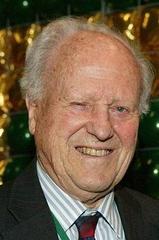
Leslie Young awarded Distinguished Fellow of NZAE

Leslie Young is Wei Lun Professor of Finance and Executive Director of the Asia-Pacific Institute of Business at the Chinese University of Hong Kong. He is an outstanding economist by any yardstick. Leslie’s interests span finance, international trade political economy and, the interaction among culture, political economy and economic performance. His standing is indicated by his holding the prestigious V.F Neuhaus Professorship in Finance and the University of Texas at Austin (UTA) where he was also Professor of Economics between 1985 and 1992, in which year he took up the position of Professor of Finance and the Chinese University of Hong Kong. In this position he has been the Executive Director of the Asia Pacific Institute of Business since 1993 in which capacity he has enlarged the extent and standing of its programs across a range of countries. Leslie has held Visiting Professorships at universities that include University of California at Berkeley and MIT. He is the longest serving member of the Editorial Board of the American Economic Review having completed four consectutive terms.

From the outset, Leslie’s outstanding facility with mathematics never got in the way of insightful analysis of economic issues expressed in a lively interesting manner. He has a stable of papers on the implications of uncertainty for aspects of international trade and finance: they appear in such journals as the Journal of Economic Theory, Journal of International Trade and Review of Economic Studies. Further work in trade and uncertainty produced papers evaluating the welfare effects of trade restrictions of various sorts. In the 1980s and early 1990s Leslie produced papers on the political economy of trade policy, particularly with Stephen Magee, a colleague at UTA, and William Brock. The most well-known work was their highly commended book Black hole Tariffs and Endogenous Redistribution Theory, Cambridge University Press, 1990, which set out an “interest group” general equilibrium with respect to the determination of trade policy. Leslie’s interest in the interaction between economic and legal processes are reflected in two papers with James Andersen1 where they examine the optimal enforcement of contracts when contracts must be incomplete and enforcement differs. His interest in governance is illustrated by papers concerning the separation of ownership and control in listed corporations in different cultures.2 The interaction among law, culture and economic behaviour is suggested to be critically important by Leslie’s foregoing works and it has has been an ongoing interest of his. Leslie argues that differences across countries in these characteristics are reflected in different langauge and other institutional rules that affect economic and financial performance, including crises. His comparison of the economies of India and China3, and Asia and Western4 economies illustrate his position.

Leslie was born in Guangzbou and came to New Zealand at the age of two. His family were market gardeners in Levin, where he attended Horowhenua College. He came to Victoria University at 16 as a Junior Scholar. In his first two years, he completed his B.Sc. but this progress was too rapid for him to graduate under University statutes. In his third year, he completed a Bsc. with First Class Honours in mathematics, plus a paper in Mathematical Logic with the Philosophy Department. He was awarded a Senior Scholarship, an Alexander Crawfod Scholarship, a NZ Sugar Company Scholarship, and a Postgraduate Scholarship and Commonwealth Scholarship. While waiting to go to Oxford, he completed an M.Sc. with distinction in mathematics by August 1969. He later learnt from his Supervisor, Wilf Malcolm (by then VC of Waikato) that a seminar that he had given from his thesis was the origin of the Algebra/Logic seminar that the Victoria University of Wellington Mathematics Department ran in the 70’s and 80s. Shortly after his arrival in Oxford, Dr. Malcolm wrote to say that the external examiner (Dr. R. A. Bull of Canterbury) had recommended his M. Sc. thesis for a Ph.D. However, during the first year at Oxford Leslie completed a different doctoral thesis (just before his 21st birthday) that was subsequently awarded a Senior Mathematics Prize by Oxford University. While waiting to complete his residence requirements for his D.Phil, he was introduced to Professor James Mirrlees (Nobel Laureate in Economics, 1996), who, along with Nicholas Stern (at that time holding an academic postion at Oxford) induced Leslie to write essays. After a year of this activity, he escaped by taking up a Junior Research Fellowship in Economics at Lincoln College, Oxford, thence to the University of Canterbury’s economics department in 1975. His next appointment was at UTA.

Leslie modestly attributes a good deal of his success to the tolerant, friendly, interested people-environment in which he was brought up in New Zealand. His stimulating, engaging presentations have been a high-impact feature of Leslie’s visits to Wellington over the past 15 years.

Papers referred to

1. Andersen, James E. and Leslie Young, Trade Implies Law: The Power of the Weak, NBER Working Paper 7702, 2000, pp.30; and Andersen, James E. and Leslie Young, “Trade and Contract Enforcement”, Contributions to Economic Analysis & Policy (2006), Vol 5 (1), Article 30.

2. Faccio, M., Lang L. H. P. and Young, L., ‘Dividends and expropriation’, American Economic Review, Vol. 91, 2001, pp. 1–25; and Gadhoum, Yoser, Larry H.P. Lang and Leslie Young, “Who Controls US?”, European Financial Management, Vol. 11, No. 3, 2005, 339-363.

3. Young, Leslie, Economic Development in China and East Asia: Lessons for India, address, (https://www.slideserve.com/Albert_Lan/economic-development-in-china-east-asia-lessons-for-india-leslie-young-professor-of-finance-executive-director-asia) accessed May 30 2012.

4. Young, Leslie, ‘Comment on: “Why Are Saving Rates So High in China?”‘ chapter in NBER book, Capitalising China, Joseph Fan and Randall Morck eds., Chicago University Press, 2009.
March 2012 NZEP includes critiques of Wolak paper on NZ electricity market

The contents of New Zealand Economic Papers, Volume 46, Issue 1, March 2012 (available online or by subscription):

  • A critique of Wolak’s evaluation of the NZ electricity market: Introduction and overview
  • A critique of Wolak’s evaluation of the NZ electricity market: The incentive to exercise market power with elastic demand and transmission loss
  • An examination of Frank Wolak’s model of market power and its application to the New Zealand electricity market
  • Simulating market power in the New Zealand electricity market
  • A critique of Wolak’s evaluation of the NZ electricity market: Afterword
  • A critique of Wolak’s evaluation of the NZ electricity market afterword: A rejoinder
  • Prescriptivism to positivism? The development of the CPI in New Zealand
  • Why the shadow of the law is important for economists
  • The A.R. Bergstrom Prize in Econometrics, 2012

Sir Frank Holmes passes away

Sir Frank Holmes, a distinguished New Zealand economist and one of the founders of the New Zealand Association of Economists and the first editor of New Zealand Economic Papers, passed away on 23 October 2011. Sir Frank is the only person to be elected as both a Life Member and Distinguished Fellow of NZAE. More information on Sir Frank’s contribution to NZAE and the economics profession is available on our Life Members and Distinguished Fellows pages.

His obituary can be found in issue 42 of Asymmetric Information.

Applications sought for the tenth A R Bergstrom Prize in Econometrics by 24-Aug-12

Applications are now being sought for the tenth A R Bergstrom Prize in Econometrics.

The objective of the Prize is to reward the achievement of excellence in econometrics, as evidenced by a research paper in any area of econometrics. The Prize is open to New Zealand citizens or permanent residents of New Zealand who, on the closing date of applications, have current or recent (i.e. within two years) student status for a higher degree. It is intended that the awardee will utilise the proceeds to assist in financing further study or research in econometrics in New Zealand or overseas.

The Prize can be awarded once every two years, with its value currently being $2000. The selection committee will consist of Professors P C B Phillips, V B Hall and their nominees.

Applications/nominations must include:

• a formal letter of application and, in the case of students, a letter of nomination by their research adviser or chairperson

• a research paper written by a single author, reporting original research in any area of econometrics

• a CV and relevant academic transcripts

Applications should be emailed or posted by 24 August 2012, to:

Professor V B Hall
School of Economics and Finance
Victoria University of Wellington
P O Box 600 Wellington
NEW ZEALAND

Email: viv.hall@vuw.ac.nz

The Prize is supported by funds generously provided by the following sponsors:

    Institutional Sponsors

The New Zealand Association of Economists
The School of Business and Economics at the University of Auckland
The Department of Economics at the University of Canterbury
The Faculty of Commerce and Administration at Victoria University of Wellington
Lincoln University
The Economics Group, Commerce Division at Lincoln University

    Personal Sponsors

C R Wymer
A D Brownlie
R J Bowden
H A Fletcher
R H Court
J A & D E A Giles
Anonymous
V B Hall
D M Emanuel
K B Nowman
P C B Phillips

In addition, royalties from the Festschrift Volume Models, Methods and Applications of Econometrics: Essays in Honour of A.R. Bergstrom, P.C.B. Phillips (ed.) Blackwell, Cambridge MA and Oxford UK, 1993, and from A Continuous Time Econometric Model of the United Kingdom with Stochastic Trends, by Albert Rex Bergstrom and Khalid Ben Nowman, Cambridge University Press, 2007, are applied to support the prize.

December 2011 NZEP available now

The contents of New Zealand Economic Papers, Volume 45, Issue 3, December 2011 (available online or by subscription):

  • Monetary policy implementation and uncovered interest parity: Empirical evidence from Oceania
  • The effects of weather on crime
  • The fixed price offer mechanism in Trade Me online auctions
  • A quarterly post-Second World War real GDP series for New Zealand
  • Changes in the tax mix from income taxation to GST: Revenue and redistribution
  • Price discrimination in Australasian air travel markets

The future is now

It is a truism that Western economies face a demographic problem: more older people and fewer working-age people will mean a higher dependency ratio. This future problem, we are told, requires action now, Now, NOW! We must prepare for the future by raising the retirement age and reducing superannuation payments.

Except that the future is already here, and no one has pushed the panic button. Continue reading

What’s this ‘we’ stuff?

Alex Tabarrok posted at Marginal Revolution about sticky wages. It’s an interesting bit of mathematics. I can see his point, that sticky wages for employed people can keep the labour market from adjusting. Because the unemployed are a minority of the labour force, even large reductions in the wages they are willing to accept have a small impact on the total wage bill.

My reaction to this bit

If all employed workers accepted a 5% pay cut (or if the government ordered such a cut) and the Fed kept targeting inflation, we’d experience rapid economic growth.

was, ‘What’s this “we” stuff?’. Continue reading

Inchworm, inchworm, measuring the marigolds

NZIER (where I work) has just published a new Insight on the next steps for water policy. The Royal Society recently published an issues paper on ecosystem services. Natural capital and the value it creates for the economy is clearly topical. Continue reading

Double taxation doublespeak

I generally stay out of tax debates. I don’t know the economic theories, and valid comparisons are difficult to make.

This comparison by Rodney Hide (via Kiwiblog) bothered me, however:

A business generates $100 a year. The going discount rate is 10 percent. The value of the business is $1,000. That’s if there’s no tax.

Introduce a tax of, say, 30 percent, and the business now yields only $70 a year. The business is worth only $700. The tax liability is capitalised into the value of the business. Continue reading

History of Economics at the University of Otago

From the University of Otago School of Business

“An official book launch celebrating Emeritus Professor Lyall McLean’s “A History of Economics and the Development of Commerce Degrees at the University of Otago 1871-2009” took place last night in Council Chambers of the University of Otago.

Lyall’s book builds on the work undertaken by Emeritus Professor T.K. Cowan who in 1988 wrote “Commerce at Otago, 1912 – 1987”

In addition to the history of the School the book includes, as an appendix, the names of all 19000+ graduates, listed by departments and 100+ photographs including the professors, Deans, heads of departments and the first PhD graduates of each department, will be available for sale at the launch.

This book is available for purchase at University Book Shop.”

A History of Economics and the Development of Commerce Degrees at the University of Otago 1871-2009 by Lyall McLean


Scoping the History of Economics in New Zealand

Gary Hawke and Ralph Lattimore presented the paper History of NZAE 20 July 05 at the New Zealand Association of Economists Meetings, Christchurch, June 2005. The paper is work in progress, intended to stimulate input into a history of the first 50 years of the NZ Association of Economists which will be celebrated in 2009. If it is quoted, its preliminary nature should be respected. Hawke, Head of the School of Government, Victoria University of Wellington, Gary.Hawke@vuw.ac.nz, Lattimore, consulting economist, Hope, Ralph.Lattimore@xtra.co.nz. The authors acknowledge the valuable library assistance of Sarah Spring and advice from John Yeabsley.